
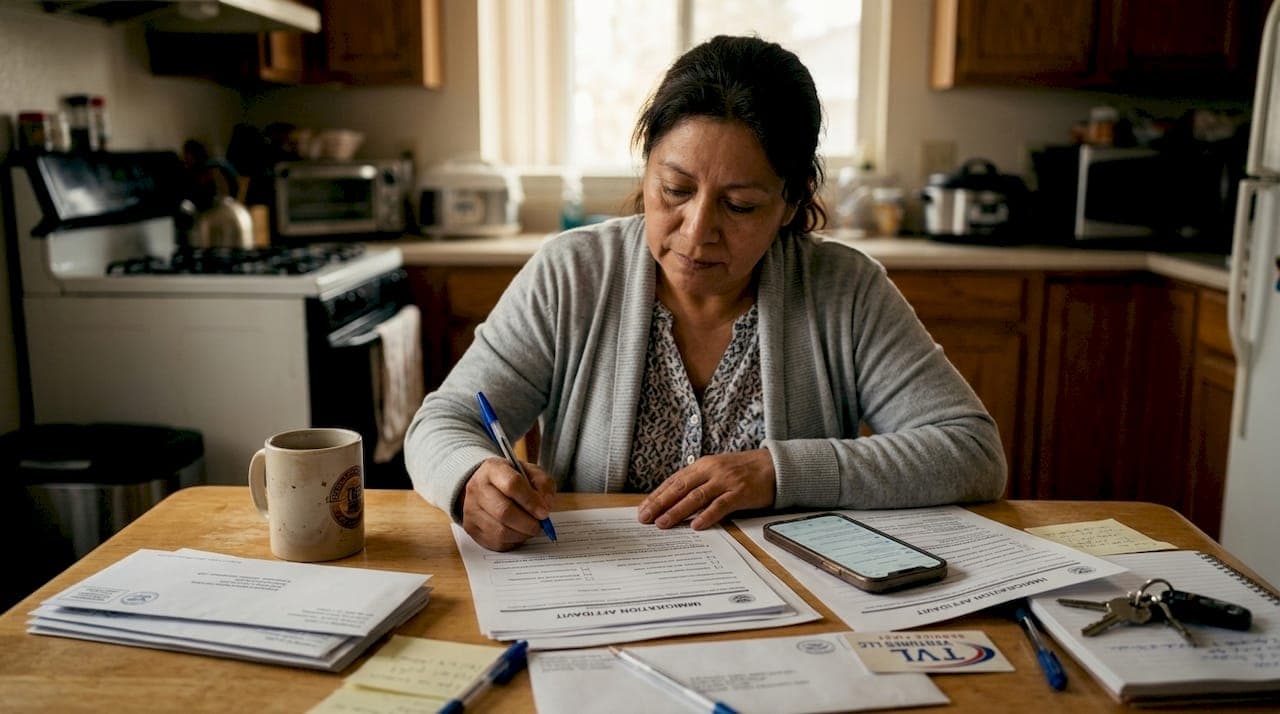
Signing an affidavit for an immigration application is not a formality. It is a legally binding commitment that can follow you for years, expose you to lawsuits, and directly determine whether your family member gets a green card. Many immigrants and sponsors treat these documents as routine paperwork, not realizing that forms like the I-864 Affidavit of Support create enforceable financial contracts under federal law. This guide walks you through what affidavits are, the different types you may encounter, who qualifies as a sponsor, what the exemptions look like, and how to use personal affidavits as evidence when official documents are unavailable.
Table of Contents
- What is an affidavit and why does it matter in immigration?
- Types of affidavits used in U.S. immigration
- Sponsor requirements, obligations, and risks
- Exemptions and special cases: When affidavits are not required
- Affidavits as evidence: How and when to use personal affidavits
- Affidavits in immigration: What most applicants and sponsors miss
- Need help with your affidavits or immigration paperwork?
- Frequently asked questions
Key Takeaways
| Point | Details |
|---|---|
| Affidavits are legally binding | Signing an immigration affidavit means entering a contract with real financial and legal consequences. |
| Multiple affidavit types | Different forms serve different immigration purposes, from financial support to proving relationships. |
| Sponsor obligations endure | Sponsors remain liable for support, even after divorce, until citizenship or other ending events. |
| Exemptions exist | Certain groups like refugees and VAWA petitioners are exempt from financial affidavits and use Form I-864W. |
| Affidavits as evidence | Personal affidavits help prove relationships when documents are missing, but must meet strict credibility requirements. |
What is an affidavit and why does it matter in immigration?
An affidavit is a sworn written statement that a person signs under penalty of perjury. In U.S. immigration, affidavits serve two broad purposes: they either establish financial support for an immigrant or provide personal testimony about facts that official documents cannot fully prove. Both types carry serious legal weight.
The most well-known financial affidavit is Form I-864, the Affidavit of Support. This form is not simply a letter saying you will help someone. The I-864 is a legally enforceable contract where the sponsor commits to maintaining the immigrant at 125% of the Federal Poverty Guidelines to prevent the immigrant from becoming a public charge. If the immigrant receives means-tested government benefits, the government or the immigrant can sue the sponsor to recover those costs.
Non-financial affidavits are different. These are personal statements from you, your family members, or close friends used to support facts like the existence of a genuine marriage, a birth that was never officially registered, or a sibling relationship when records were lost. To understand the full scope of what you may need to gather, reviewing an immigration document checklist early in the process can save you significant headaches.
Common types of affidavits in immigration include:
- Form I-864: Financial support for most green card applicants
- Form I-134: Financial support for nonimmigrant (temporary) visa holders
- Personal or third-party affidavits: Sworn statements proving relationships, identity, or facts
- Affidavits from community members: Used when vital records are missing or incomplete
One critical detail many people miss is the immigration notary requirements that apply to these documents. Some affidavits must be notarized; others must simply be signed under penalty of perjury. Knowing which applies to your situation before you submit is essential.
Types of affidavits used in U.S. immigration
Understanding which affidavit applies to your case is where many applicants get stuck. The form you need depends on the visa category, the immigration benefit you are seeking, and whether the supporting documents you would normally submit are actually available.
Form I-864 is required for most family-based immigrants, including immediate relatives and preference categories, as well as certain employment-based immigrants where a relative filed the petition or holds an ownership interest in the petitioning business. If you are sponsoring a spouse, parent, child, or sibling for a green card, this form almost certainly applies to you.
Form I-134 applies to nonimmigrant visa categories, such as certain visitors, exchange visitors, and humanitarian parole recipients. It is less legally binding than the I-864 but still signals to immigration officers that the visitor will not rely on public resources. In recent years, USCIS has expanded its use for specific humanitarian programs. When primary documents are unavailable, sworn affidavits from third parties serve as secondary evidence for relationships, births, or other facts, and at least two are required for them to be accepted as substitutes.
Here is a quick overview of the main affidavit types and their uses:
| Form | Purpose | Who files it | When it's used |
|---|---|---|---|
| I-864 | Financial support | U.S. citizen or LPR sponsor | Family-based green cards, some employment-based |
| I-864A | Household member income | Additional household contributor | When sponsor's income alone is insufficient |
| I-864EZ | Simplified financial support | Sponsors with straightforward income | Eligible family-based cases |
| I-864W | Exemption from support | Immigrant who qualifies for exemption | Refugees, VAWA, certain children |
| I-134 | Temporary financial support | Any supporter | Nonimmigrant and humanitarian cases |
| Personal affidavit | Relationship or fact testimony | Friends, family, community members | Missing vital records, bona fide marriage proof |
If you are working through a green card step-by-step guide, pay close attention to which stage requires which form. Mixing up the I-864 and I-134, or forgetting the I-864A when a joint sponsor is needed, can delay or derail your case.
Also consult a US immigration checklist to track every form and supporting document your case requires from start to finish.
Sponsor requirements, obligations, and risks
Becoming a sponsor is a decision that deserves careful thought, not just a signature. The legal obligations are real, long-lasting, and difficult to escape.

Who can be a sponsor? Sponsors must be U.S. citizens, nationals, or lawful permanent residents. They must be at least 18 years old, domiciled in the United States, and able to demonstrate income through tax returns, recent pay stubs, or employer letters. If a primary sponsor does not meet the income threshold, a joint sponsor or a household member filing Form I-864A can help bridge the gap.
What does sponsorship actually obligate you to do?
- Maintain the sponsored immigrant at or above 125% of the Federal Poverty Guidelines for their household size
- Report address changes to USCIS and the U.S. Department of State
- Reimburse the federal or state government if the immigrant receives means-tested public benefits
- Comply with any court order requiring reimbursement if sued for support
When does the obligation end? Sponsor obligations last until the immigrant becomes a naturalized U.S. citizen, has worked 40 qualifying quarters under Social Security, abandons their green card, or dies. Divorce does not end it. Job loss does not end it. Moving to another state does not end it. These are facts that catch many sponsors off guard.
The financial I-864 support obligations are especially significant because both the immigrant and the government can bring a lawsuit to enforce them. Courts have sided with immigrants against sponsors who refused to provide support, and those verdicts can result in wage garnishment or liens.
Here is a summary of the income thresholds sponsors often face based on household size in a recent year:
| Household size | 125% Federal Poverty Guideline (contiguous states) |
|---|---|
| 2 | $24,650 |
| 3 | $31,075 |
| 4 | $37,500 |
| 5 | $43,925 |
| Each additional person | +$6,425 |
(Guidelines are updated annually. Always check the current year's figures before filing.)
For a full breakdown of what sponsorship means at every stage, the sponsor obligations guide from our blog covers these nuances thoroughly. If you are just beginning to figure out whether you qualify, the step-by-step petition guide walks through the process in practical terms.
Pro Tip: If your income is close to but below the required threshold, do not wait to discover this at the consular interview. Identify a qualified joint sponsor early and prepare their I-864 documents at the same time as yours. This prevents costly delays.
Exemptions and special cases: When affidavits are not required
Not every immigrant must file an I-864. Knowing whether you fall into an exempt category can simplify your application considerably.
Exemptions from the I-864 include refugees and asylees, VAWA (Violence Against Women Act) self-petitioners, certain children who automatically acquire citizenship upon entering the United States, and immigrants who have already worked 40 qualifying quarters under Social Security. These individuals file Form I-864W instead, which documents their exemption status rather than providing a financial pledge.
Here is a breakdown of the main exempt groups:
- Refugees and asylees: Receive government-funded resettlement support and are not subject to public charge rules in the same way
- VAWA self-petitioners: Survivors of abuse who petition independently are specifically protected from having to involve their abuser as a sponsor
- Certain children: Children who will automatically become U.S. citizens upon admission under the Child Citizenship Act do not need an affidavit of support
- 40 quarters workers: Immigrants who have personally worked or been credited with 40 Social Security quarters qualify for an exemption
It is important to note that the affidavit exemption rules are interpreted strictly. Simply believing you might qualify is not enough. You need to document your exemption clearly and file the correct form. If you incorrectly skip the I-864, your case can be denied or returned. For a broader look at how exemptions fit into the overall process, the green card exemptions guide provides helpful context.
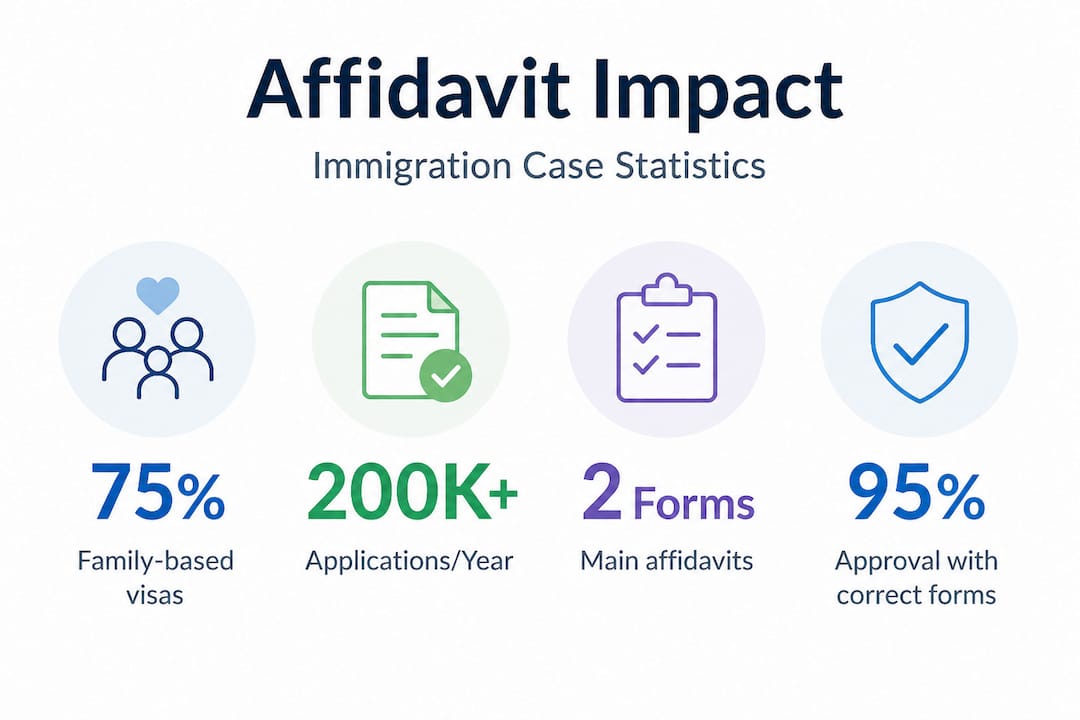
Statistic to keep in mind: USCIS processes hundreds of thousands of adjustment of status and immigrant visa applications each year. A significant portion of delays and requests for evidence involve missing or incorrect affidavit of support forms, meaning this is one of the most common and preventable errors applicants make.
Affidavits as evidence: How and when to use personal affidavits
Beyond financial support, affidavits play a vital role as secondary evidence when official documents are missing, destroyed, or never existed. This is especially relevant for immigrants from countries with inconsistent record-keeping or those fleeing situations where paperwork was lost.
When proving a bona fide marriage for an I-130 petition, for example, USCIS accepts affidavits from friends and family members who can attest to the relationship based on personal knowledge. These must be notarized or signed under penalty of perjury to carry weight.
Non-financial affidavits provide critical personal testimony when documents are unavailable, but USCIS strongly prefers primary evidence like birth certificates, marriage licenses, and official records. When those are absent, you need at least two strong affidavits to serve as substitutes, and they need to be specific and credible.
What makes a personal affidavit credible to USCIS?
- Specificity: The affiant should describe concrete events, dates, places, and details, not vague general statements like "I know they are married."
- Personal knowledge: The person writing the affidavit must have actually witnessed or been part of the relationship, not just heard about it.
- Consistent details: Affidavits from different people should corroborate each other without being suspiciously identical.
- Proper format: Signed under penalty of perjury or notarized, with the affiant's full name, address, and relationship to the applicant clearly stated.
"USCIS adjudicators are trained to identify affidavits that are overly generic, clearly coordinated, or missing specific personal detail. The more concrete and honest your affidavit, the more credibility it carries in the review process."
Pro Tip: Ask two or more people who know both parties well, such as a neighbor who attended the wedding, a coworker who met the couple regularly, or a longtime friend who can describe shared living arrangements and milestones. The more specific and varied the accounts, the stronger the combined evidence.
For a practical walkthrough of gathering this type of evidence, the guide on collecting immigration evidence explains what USCIS officers actually look for and how to organize your submission.
Affidavits in immigration: What most applicants and sponsors miss
After working with immigrant families through these processes, one pattern stands out clearly: people consistently underestimate how permanent and legally powerful these documents are.
Most sponsors think of the I-864 as a letter of promise. In reality, it is an enforceable contract that joint sponsors share full liability for, one that survives divorce, persists through bankruptcy, and can result in lawsuits where claim preclusion prevents defendants from relitigating settled issues. We have seen sponsors shocked to learn that years after a marriage ended, they were still legally responsible for their former spouse's public benefits.
The same applies to false or careless affidavits. Padding a personal testimony affidavit with exaggerated claims, or having someone sign a financial support form when they clearly cannot meet the threshold, is not just a paperwork problem. It can be treated as immigration fraud, which carries criminal penalties. USCIS and immigration courts take perjury seriously.
There is also the issue of comprehensive immigration support planning, something many families skip in favor of rushing through forms. The sponsors who face the fewest problems are the ones who understood the obligations before signing, not after. If we could change one habit in our clients, it would be reading the affidavit as carefully as a mortgage contract, because that is closer to what it actually is.
The uncomfortable truth is that immigration affidavits are among the most consequential documents many people will ever sign. Treating them as routine is how families end up in financial or legal trouble years down the line.
Need help with your affidavits or immigration paperwork?
Navigating affidavit requirements on your own is possible, but one wrong form or a missed signature can delay your case by months or trigger a request for evidence that sets everything back. At True Ventures, LLC, our team has firsthand immigrant experience and understands exactly what USCIS expects.

Whether you need help preparing an I-864, identifying your exemption status, or drafting credible personal affidavits, our immigration filing assistance service provides one-on-one support at every step. Based in Minneapolis, we work with immigrant families across a wide range of visa and green card categories. Explore our full range of services through our Minneapolis immigration consulting offerings and connect with a consultant who can review your specific documents and situation before you submit anything.
Frequently asked questions
Do all immigrants have to file an affidavit of support?
No. Exemptions include refugees, asylees, VAWA self-petitioners, certain children acquiring citizenship, and those with 40 Social Security quarters. These individuals file Form I-864W to document their exemption instead.
What happens if a sponsor loses their job or divorces the immigrant?
The obligation continues regardless. Divorce does not end the I-864 contract, and unemployment is not a legal defense against enforcement. The sponsor remains liable until the immigrant naturalizes, works 40 quarters, or another qualifying ending event occurs.
How many affidavits are needed to prove a family relationship if documents are missing?
USCIS requires at least two sworn affidavits from credible individuals with personal knowledge of the relationship to serve as secondary evidence when primary documents like birth certificates or marriage licenses are unavailable.
Can falsifying an affidavit in immigration lead to criminal charges?
Yes. Providing false information in an immigration affidavit can result in fraud charges and serious criminal penalties. As noted in recent case law, these documents carry full legal force, and misrepresentation is treated as a federal offense.