
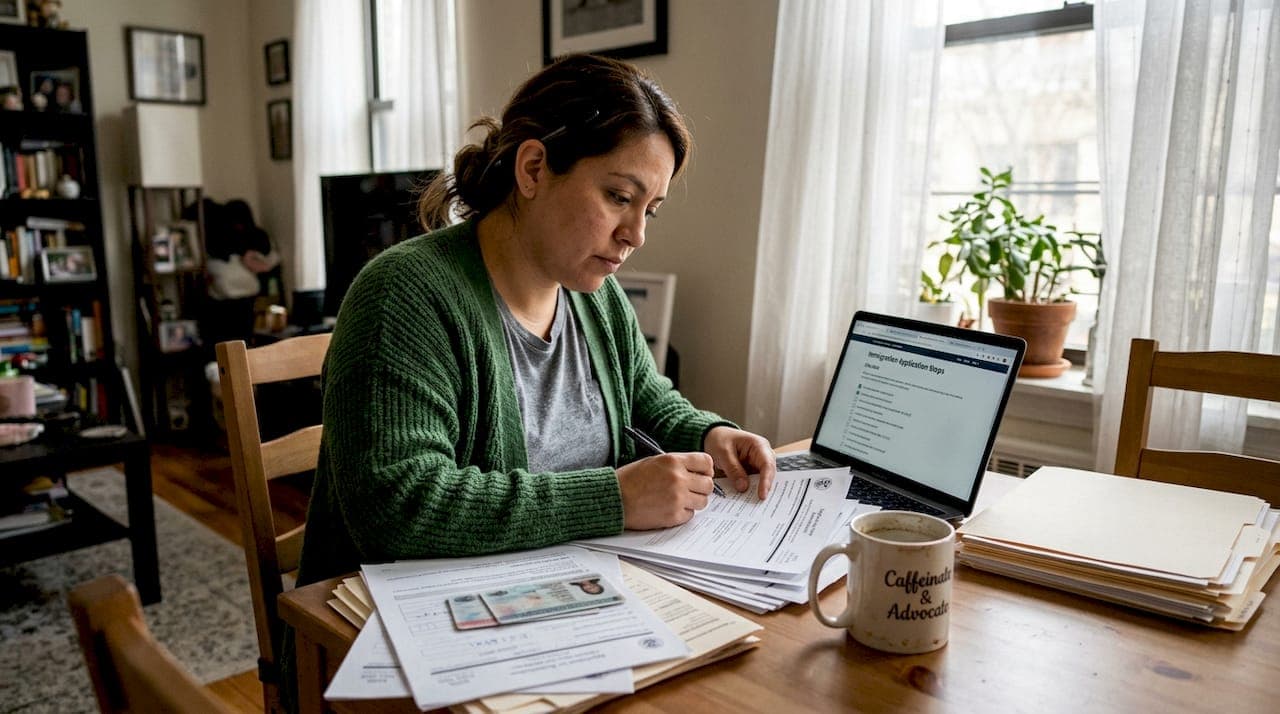
One missing document can freeze your entire U.S. immigration application for months. That is not an exaggeration. Missing required documents or submitting originals when copies are needed can cause processing delays that set families back by a year or more. Whether you are petitioning for a spouse, a parent, or a sibling, the paperwork requirements are specific, layered, and easy to get wrong. This guide walks you through every stage of the documentation process, from foundational forms to category-specific evidence, so you can file with confidence and avoid the most common traps.
Table of Contents
- Understanding essential U.S. immigration forms
- The ultimate immigration document checklist
- Comparison of requirements: Immediate vs. family preference categories
- Common pitfalls and compliance tips
- A practical perspective: what real applicants get wrong and how to get it right
- Streamline your immigration journey with professional support
- Frequently asked questions
Key Takeaways
| Point | Details |
|---|---|
| Checklist prevents delays | Organizing all required documents before filing avoids Requests for Evidence and speeds up approvals. |
| Category matters | Immediate relatives face fewer document hurdles and can often file more efficiently than family preference applicants. |
| Certified translations required | Non-English documents must have certified English translations to meet USCIS standards. |
| Avoid common mistakes | Missing bona fide evidence or failing to prove maintained status are leading causes of denials. |
| Professional support available | Expert immigration consultants can help review your checklist, ensuring compliance and peace of mind. |
Understanding essential U.S. immigration forms
Before you gather a single document, you need to understand which forms actually drive your case. Two forms sit at the center of most family-based immigration filings: Form I-130 and Form I-485.
Form I-130, the Petition for Alien Relative, is the starting point for family-based immigration. It proves two things: your qualifying relationship with the person you are sponsoring, and your own status as a U.S. citizen or lawful permanent resident. Think of it as the foundation. Without an approved I-130, nothing else moves forward.
Form I-485, the Application to Register Permanent Residence or Adjust Status, is what the beneficiary files to actually obtain a green card while staying inside the United States. It requires a separate and substantial set of documents, including identity evidence, medical records, and financial support documentation.
Here is where timing matters. Immediate relatives of U.S. citizens can file both forms at the same time, which is called concurrent filing. This shortcut saves months. Family preference category applicants, on the other hand, must wait for a visa number to become available before filing I-485. Understanding this distinction shapes your entire document strategy.
Key forms and supporting evidence you should know:
- Form I-130: Proof of U.S. citizenship or permanent residency, proof of relationship (birth certificates, marriage certificates), passport-style photos
- Form I-485: Government-issued ID, Form I-94 (arrival/departure record), medical exam results (Form I-693), Affidavit of Support (Form I-864)
- Form I-864: Sponsor's tax returns, pay stubs, employment verification letter
- Form I-131 and I-765: Filed alongside I-485 for travel authorization and work permit, respectively
For a broader view of how these forms connect, the Green Card process guide on our site breaks down each stage in plain language. Getting clear on the forms first makes the checklist much easier to follow.
The ultimate immigration document checklist
Now that we have outlined the key forms, here is your complete checklist organized by filing stage.
Stage 1: Filing Form I-130 (family petition)
- Completed and signed Form I-130
- Filing fee payment
- Proof of petitioner's U.S. citizenship or permanent resident status (passport, naturalization certificate, or green card)
- Proof of qualifying relationship: birth certificate for parent/child cases, marriage certificate for spousal cases
- Passport-style photos for both petitioner and beneficiary
- Proof of legal name change (if applicable)
Stage 2: Filing Form I-485 (adjustment of status)
- Completed and signed Form I-485
- Filing fee and biometrics fee
- Copy of government-issued photo ID
- Copy of passport biographical page
- Copy of Form I-94 (arrival/departure record)
- Two passport-style photos
- Certified medical exam results on Form I-693, sealed by a USCIS-designated civil surgeon
- Affidavit of Support (Form I-864) with supporting financial documents
- Category-specific evidence (marriage bona fides, birth records, or employment authorization)
The I-485 checklist from USCIS confirms that the form requires government ID copies, medical exam results, affidavit of support, and category-specific evidence. Missing any one of these triggers a Request for Evidence, which is a formal notice that stalls your case.
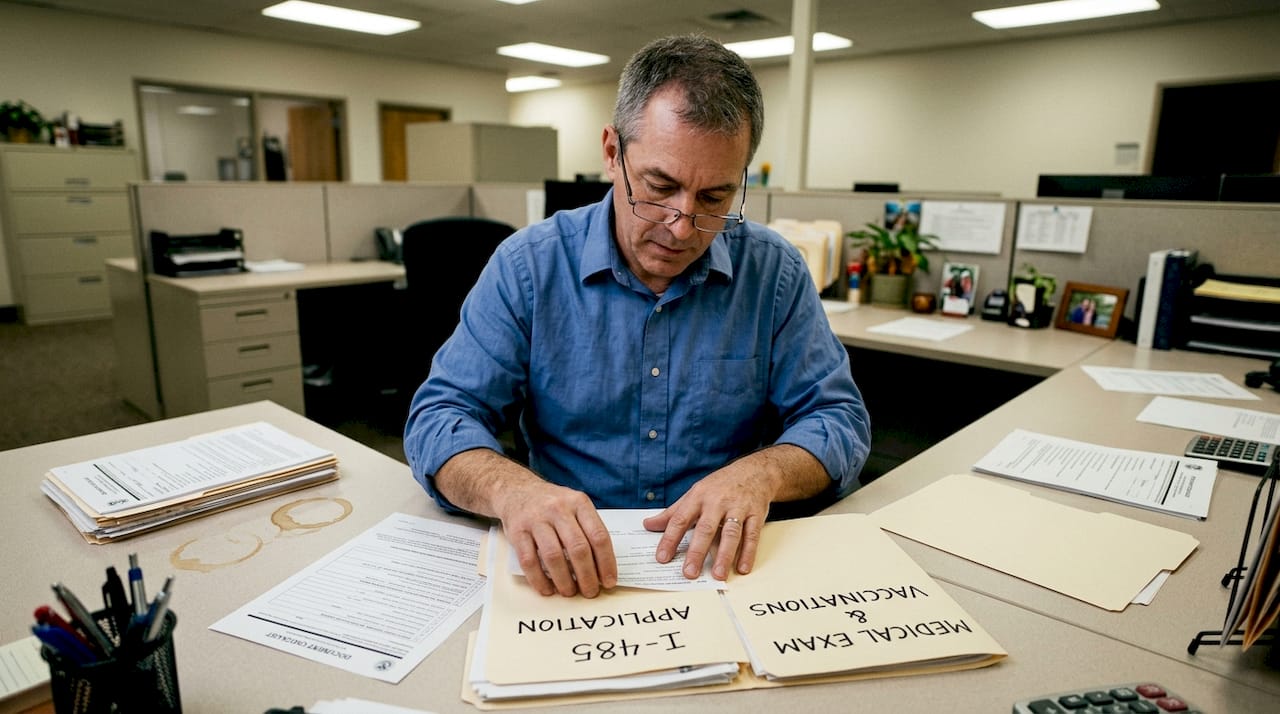
Pro Tip: Organize your documents in the exact order USCIS lists them on the official checklist. Reviewers work through applications systematically, and a well-organized package signals professionalism and reduces the chance of an oversight. Learn more about avoiding filing errors before you submit.
Comparison of requirements: Immediate vs. family preference categories
With your checklist ready, it is important to understand that not all applicants follow the same path. Your immigration category determines both your wait time and your document requirements.
Who qualifies as an immediate relative? Immediate relatives of U.S. citizens include spouses, unmarried children under 21, and parents (when the petitioner is 21 or older). There is no annual cap on visas for this group, which means no waiting in line.
Family preference categories cover a broader range of relationships but face annual numerical limits. These include adult children, married children, and siblings of U.S. citizens, as well as spouses and children of permanent residents.
Immediate relatives can file concurrently and face no visa wait, whereas family preference applicants must monitor quotas and submit independent documentation when a visa number finally becomes current.
| Feature | Immediate relatives | Family preference categories |
|---|---|---|
| Annual visa cap | None | Yes, limited numbers |
| Concurrent filing (I-130 + I-485) | Yes | Only when visa is current |
| Typical wait time | Months | 2 to 22+ years |
| Derivative beneficiaries | Limited | Yes (spouses/children follow) |
| Visa Bulletin monitoring required | No | Yes |
For family preference applicants, derivative beneficiaries (meaning the spouse or children of the principal beneficiary) can often be included in the same petition. Each derivative needs their own supporting documents: birth certificates, marriage certificates, and passport copies.
If you are exploring employment-based pathways that run parallel to family petitions, the strategic EB-3 visa paths guide offers useful context for planning your options.
Key takeaways by category:
- Immediate relatives: prioritize concurrent filing to save time
- Family preference: track the Visa Bulletin monthly and prepare documents early
- All categories: keep copies of every document you submit
Common pitfalls and compliance tips
Even well-prepared applicants make avoidable mistakes. Here is how to stay on the right side of USCIS requirements.
Translation and certification standards
All foreign language documents must include certified English translations, and originals are not required unless specifically asked. A certified translation means the translator signs a statement confirming accuracy and their own competency. Machine translations or bilingual family members do not qualify.
Bona fides evidence for marriage cases
Incomplete bona fides evidence is a leading cause of Requests for Evidence. Bona fides means proving your marriage is real, not just legal. USCIS wants to see joint financial accounts, shared lease agreements, insurance policies naming each other as beneficiaries, and photos from different life events over time.
Common pitfalls to avoid:
- Submitting originals when copies are required
- Forgetting to include the civil surgeon's sealed envelope for Form I-693
- Using the wrong version of a form (always check USCIS for the current edition)
- Leaving fields blank instead of writing "N/A"
- Missing the joint sponsor requirement when the primary sponsor's income falls below the poverty guideline
"Use the USCIS checklist as a preparation tool, not a submission guide. It tells you what to gather, but the order and organization of your actual package matters just as much."
Pro Tip: Create a physical or digital folder for each form and label it clearly. When USCIS sends a notice or RFE, you will know exactly where to find what they are asking for. A compliance review for documents before submission is one of the smartest steps you can take. For personalized support, expert immigration guidance can help you spot gaps before they become problems.
A practical perspective: what real applicants get wrong and how to get it right
After working with families across a wide range of immigration cases, one pattern stands out. People treat the checklist as the finish line. They gather every item on the list, check the boxes, and assume they are ready. But a checklist tells you what to include, not how to make it convincing.
Marriage-based cases are the clearest example. Two applicants can submit the same documents and get completely different outcomes. The one who wins approval usually has richer, more personalized evidence: years of shared financial history, photos that tell a story, and correspondence that shows a real relationship. The one who gets an RFE submitted the minimum.
We also see applicants miss the strategic value of concurrent filing. Immediate relative petitioners who file I-130 and I-485 together shave significant time off their wait. Many do not realize this is an option until months have passed.
Finally, small errors compound. A mismatched name spelling between a passport and a birth certificate can hold up an entire case. Proactive organization and a second set of eyes on your package before submission makes a real difference. Our guide on filing error prevention walks through the most common slip-ups in detail.
Streamline your immigration journey with professional support
Gathering documents is one thing. Knowing whether your package is truly complete, correctly organized, and strategically strong is another.

At True Ventures, LLC, we review immigration filings with the precision that comes from firsthand experience navigating these systems ourselves. Our immigration filing assistance service covers I-130, I-485, and related forms, helping you avoid RFEs and delays before they happen. Whether you are just starting out or correcting a previous filing, we meet you where you are. Visit our consultant offerings to find the right level of support for your situation. A stronger application starts with a smarter preparation process.
Frequently asked questions
Do I need originals or copies of my immigration documents?
Submit copies of required documents unless USCIS specifically requests originals in a notice or instruction. Sending originals when not asked can create unnecessary risk of loss.
Do all non-English documents require translation?
Yes. USCIS requires certified translations for every document not written in English, and the translator must certify their competency in writing.
Can I file I-130 and I-485 at the same time for an immediate relative?
Yes. Immediate relatives can file concurrently for adjustment of status, which significantly reduces overall processing time compared to filing separately.
What happens if I miss a required document?
Incomplete evidence frequently causes Requests for Evidence and delays, and in serious cases can result in outright denial of your application.
How can I check if a visa is available for my category?
The Visa Bulletin determines availability for family preference cases, and USCIS updates it monthly so applicants can track when their priority date becomes current.