

Receiving a denial on an immigration benefit or facing a removal order can feel like the ground disappearing beneath your feet. The fear is real, the stakes are enormous, and the clock starts ticking immediately. But a denial is not always the end of the road. Knowing your appeal rights, which body handles your case, and exactly what steps to follow can protect your family's future and keep your options open. This guide walks you through every stage of the immigration appeal process, from understanding where to file to what happens after you submit, so you can act with confidence instead of panic.
Table of Contents
- Understanding the immigration appeal process
- Preparing for your immigration appeal
- Step-by-step: Filing your immigration appeal
- What happens after you file: Timelines, outcomes, and next moves
- Our perspective: What most guides miss about immigration appeals
- Get expert help with your immigration appeal
- Frequently asked questions
Key Takeaways
| Point | Details |
|---|---|
| Know your appeals body | Identify whether your decision must be appealed through the AAO or BIA to use the correct process. |
| Watch critical deadlines | Most appeals must be filed within 30 days, and missing the deadline could end your case. |
| Prepare strong documentation | Success often depends on providing complete, well-organized support for your claim. |
| Expect long waits and low odds | Immigration appeals can take months and have low approval rates, so prepare accordingly. |
| Consider professional help | Legal or consultation support on your appeal can greatly improve your chances of a favorable outcome. |
Understanding the immigration appeal process
Not every immigration denial goes to the same place. Where you appeal depends entirely on the type of decision you received. Getting this wrong from the start means your appeal lands in the wrong office and gets rejected before anyone even reads it.
US immigration appeals primarily go to either the USCIS Administrative Appeals Office (AAO) or the Board of Immigration Appeals (BIA). These are two separate bodies with different roles, different forms, and different review styles.
The AAO handles appeals of USCIS benefit application denials. Think visa petitions, employment-based filings, and humanitarian applications. If USCIS denied your I-130, I-140, or similar petition, you file Form I-290B with the AAO. The AAO reviews appeals for benefit denials, while the BIA handles court orders issued by immigration judges.
The BIA handles appeals of immigration judge decisions. If a judge ordered your removal or denied relief in immigration court, you file Form EOIR-26 with the BIA. The BIA does not hold new hearings by default. It reviews the written record and legal arguments.
Here is a side-by-side comparison to make this clear:
| Feature | AAO (USCIS) | BIA (DOJ) |
|---|---|---|
| Who files | Applicant or petitioner | Respondent in removal proceedings |
| What it covers | USCIS benefit denials | Immigration judge orders |
| Form used | I-290B | EOIR-26 |
| Filing fee | Varies by petition type | $110 (fee waiver available) |
| Review style | De novo (fresh review) | Appellate (record-based) |
| Deadline | 30 days (33 by mail) | 30 days from judge's decision |
Understanding which path applies to your case is not a minor detail. Filing with the wrong body wastes precious time and can forfeit your right to appeal entirely. You can explore your immigration appeal service options to get clarity on which route fits your situation.
Common AAO cases include:
- Denied employment-based visa petitions (I-140)
- Family-based petition denials (I-130)
- Denied humanitarian applications
- Certain nonimmigrant visa denials
Common BIA cases include:
- Removal orders from immigration court
- Denied applications for asylum or withholding
- Denied cancellation of removal
- Bond hearing decisions
If you are navigating a green card appeal process, understanding whether your denial came from USCIS or an immigration judge is the very first question to answer.
Preparing for your immigration appeal
Once you know which appeals body your case falls under, you need to gather materials and watch the clock. Here's how to prepare effectively and avoid time-based errors.
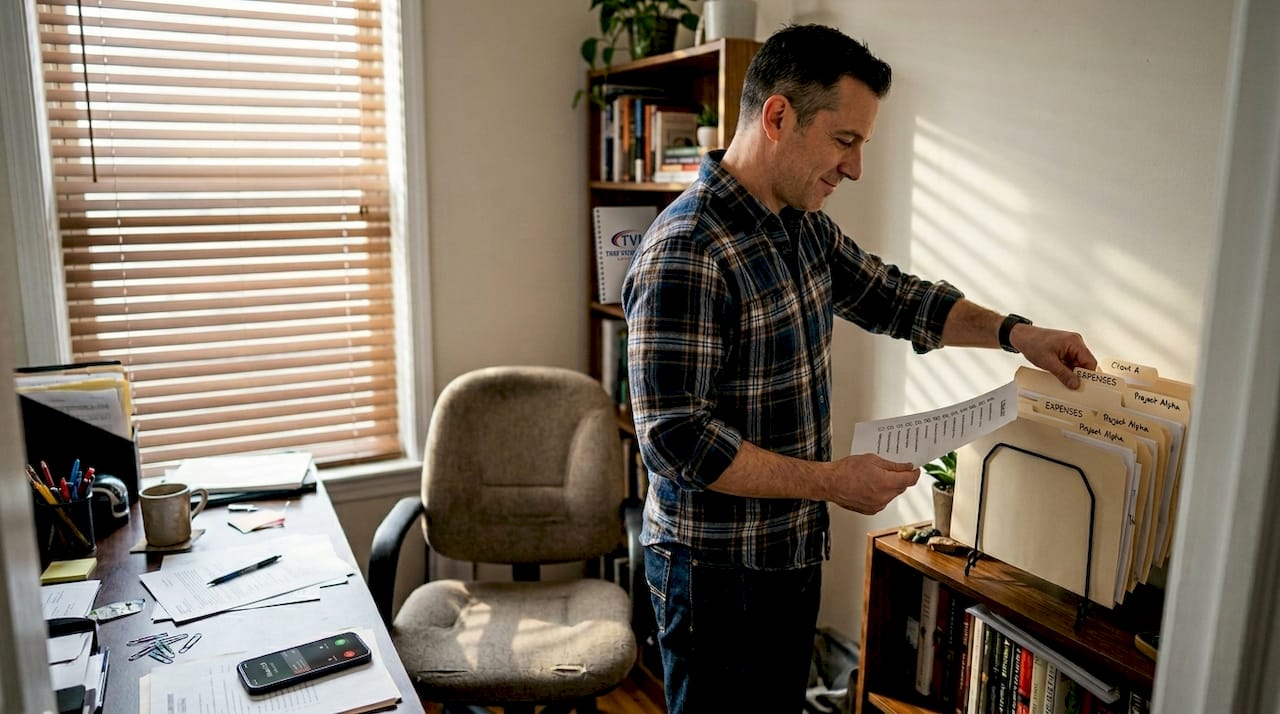
Preparation is where most appeals are won or lost before they even begin. A perfectly written brief means nothing if it arrives one day late or lacks the right documentation.
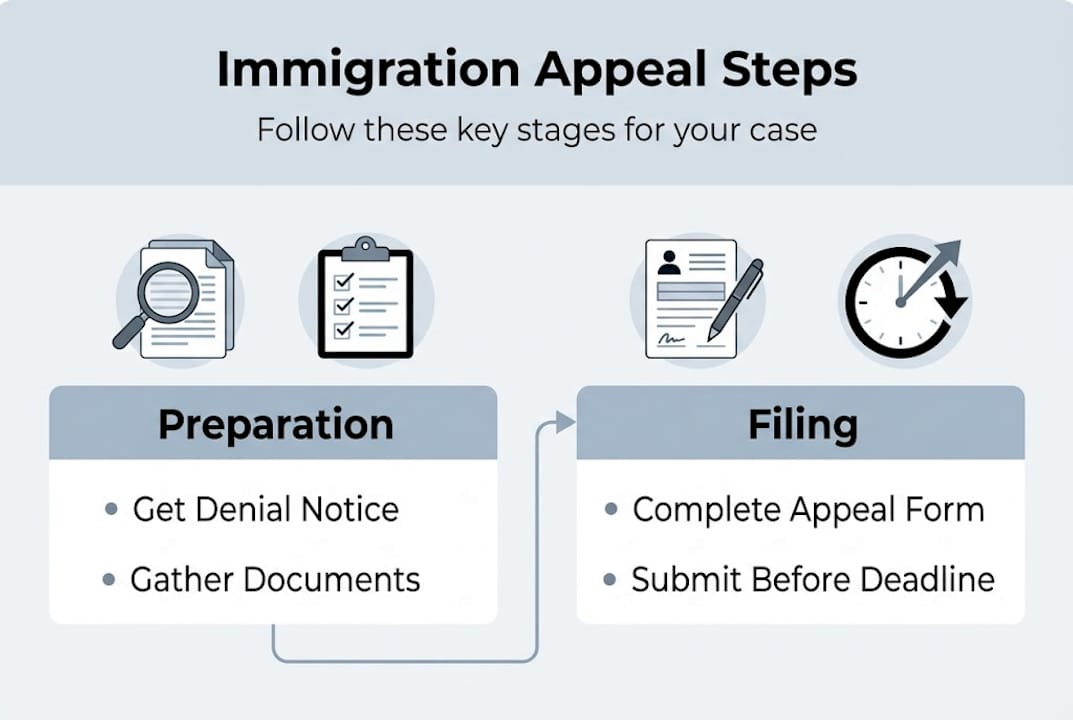
Steps to prepare your appeal:
- Locate your denial notice immediately. The clock starts from the date on that document.
- Confirm which body handles your appeal (AAO or BIA) based on the type of decision.
- Review the specific reasons for denial listed in the notice. Your appeal must directly address each one.
- Gather all original supporting documents you submitted with your initial application.
- Identify new evidence that addresses the denial reasons. Note that new evidence rules differ between the AAO and BIA.
- Confirm you have legal standing. Only the applicant, their attorney, or an authorized representative can file.
- Consult an attorney or qualified immigration consultant before submitting.
Deadlines are absolute. File I-290B within 30 days of a USCIS denial; BIA appeals via EOIR-26 must also be filed within 30 days of the judge's decision.
| Scenario | Deadline |
|---|---|
| Standard USCIS denial (in-person) | 30 calendar days |
| USCIS denial received by mail | 33 calendar days |
| BIA appeal from judge's oral decision | 30 calendar days |
| Deadline falls on weekend or holiday | Next business day |
Pro Tip: Start pulling your documents the same day you receive the denial notice. Do not wait to "see if things improve." Three days disappear fast when you are tracking down birth certificates or employer letters. Review your immigration documents checklist to make sure nothing is missing before you file.
Also check the filing tips for appeals to avoid common procedural mistakes that cause immediate rejection. If you need hands-on support, get appeal filing help before your window closes.
Step-by-step: Filing your immigration appeal
With all your deadlines and documents in order, it's time to submit your appeal. Here's exactly what to do, step by step.
Filing an AAO appeal (Form I-290B):
- Download and complete Form I-290B from the USCIS website.
- Write a detailed appeal brief explaining the legal and factual errors in the denial.
- Attach all supporting evidence, including new documents that address denial reasons.
- Calculate the correct filing fee for your petition type.
- Mail the package to the USCIS office that issued the denial, not directly to the AAO. USCIS first conducts a field review before forwarding to the AAO.
- Keep a copy of everything you send, including the mailing receipt.
Filing a BIA appeal (Form EOIR-26):
- Complete Form EOIR-26 and the Notice of Appeal.
- Pay the $110 filing fee or submit a fee waiver request.
- File with the BIA in Falls Church, Virginia, within 30 days.
- Submit a written brief within 21 days of receiving the briefing schedule.
- Attach all relevant portions of the immigration court record.
- Serve a copy on the Department of Homeland Security (DHS) attorney.
The AAO requires I-290B filed within the deadline, while the BIA requires EOIR-26, each with specific procedures and fees that must be followed precisely.
Pro Tip: A strong written brief is not optional at the BIA. The burden is on the filer to prove the original decision was wrong. Vague arguments fail. Cite specific legal standards, regulations, and case law that support your position.
For a clearer picture of what the full process looks like, the immigration consultation workflow breaks down each stage in plain terms. You can also review comprehensive immigration help resources to understand how each filing connects to the bigger picture.
What happens after you file: Timelines, outcomes, and next moves
After your appeal is filed, knowing what comes next helps you plan and avoid surprises. Here's what the process looks like after submission.
Once your appeal is in, waiting begins. But waiting does not mean doing nothing. Understanding the possible outcomes lets you prepare your next move before you need it.
AAO timelines and outcomes:
The AAO targets 180-day processing, with 98% of cases completed within that period. After review, the AAO can:
- Sustain the appeal (overturn the denial in your favor)
- Dismiss the appeal (uphold the denial)
- Remand the case back to the original office for further review
If the AAO dismisses your appeal, you cannot appeal again within the AAO. Your options become a motion to reopen or reconsider, or federal court review.
BIA timelines and outcomes:
BIA processing times vary widely. Some cases resolve in months; others stretch beyond a year depending on complexity and backlog. BIA appeal grant rates are estimated at 10 to 30%, based on analysis of 79,000 decisions between 2024 and 2026. That number is sobering but not discouraging. A well-prepared appeal with strong evidence and legal argument consistently outperforms a rushed or incomplete one.
A timely, well-argued appeal is your strongest tool. Waiting too long or filing without a clear legal strategy significantly reduces your chances of a favorable outcome.
If the BIA rules against you, federal circuit court review is the next option. This is a formal federal lawsuit and requires an attorney.
Additional options after a negative decision:
- Motion to reopen (new facts or evidence)
- Motion to reconsider (legal error in the decision)
- Federal circuit court petition for review
- Prosecutorial discretion request
Family and work impacts matter too. Learn how an attorney can improve your appeal outcome, especially when work authorization or detention risk is involved. Keeping your employment authorization document (EAD) current during the appeal period is critical for maintaining income and stability.
Our perspective: What most guides miss about immigration appeals
Most DIY guides treat immigration appeals like a checklist. Fill out the form, meet the deadline, attach documents, and hope for the best. That approach misses what actually drives results.
At True Ventures, we have seen cases where the paperwork was technically complete but the appeal failed because the written argument did not tell a clear, compelling story. The quality of your brief matters enormously, especially at the BIA. Reviewers read hundreds of appeals. A brief that clearly identifies the legal error, cites the right authority, and connects the facts to the law stands out.
Here is something most guides skip entirely: the AAO's initial field review. Before your I-290B even reaches the AAO, the original USCIS field office reviews it. Many appeals are actually resolved at this stage, sometimes in the applicant's favor. That means a strong brief submitted with your I-290B can end the process early, in your favor, without waiting months for the AAO.
Families also underestimate the financial and emotional cost of a prolonged appeal. Timely filing preserves work authorization in many cases, which directly protects household income. Waiting, hoping, or filing incomplete paperwork can cost far more than professional help upfront.
We always recommend having an attorney or qualified consultant review your brief before submission. Holistic immigration support means looking at the legal argument, the evidence, and the human story behind the case together.
Get expert help with your immigration appeal
Navigating an immigration appeal on your own is possible, but the margin for error is thin and the consequences of mistakes are serious.

At True Ventures, LLC, we help immigrants and families prepare stronger appeals by reviewing denial notices, organizing supporting documents, and ensuring every filing meets the correct procedural requirements. Our team understands what reviewers look for because we have been through this process ourselves. Whether you need help with immigration consulting services or hands-on immigration filing assistance, we are ready to support you. Do not let a preventable error cost you your case. Reach out today and let us help you build the strongest appeal possible.
Frequently asked questions
How long do immigration appeals take to process?
AAO decisions are usually made within 180 days, with 98% of cases completed in that window, while BIA timing varies but often extends several months or longer depending on case complexity.
What happens if I miss my immigration appeal deadline?
Untimely appeals are rejected unless excused for very specific reasons, which means missing the 30-day window typically closes that avenue permanently.
Can my family stay and work during my appeal?
In many cases, work authorization can be renewed while your appeal is pending, but detention risk may still exist depending on the nature of your case and any prior orders.
Are immigration appeal success rates high?
BIA success rates are estimated between 10 and 30%, which makes thorough preparation and a strong written argument essential for improving your odds.
Recommended
- Navigating Immigration Filing: Tips to Avoid Errors
- Streamline your immigration consultation: step-by-step guide
- Navigating Your Immigration Journey with Expert Guidance
- Comprehensive Immigration Support: Navigating the U.S. System with Precision
- How to Swear an Affidavit: A Step-by-Step Guide - The Online Notary