

Navigating the U.S. immigration system as a family can feel like solving a puzzle where the pieces keep changing. Forms pile up, deadlines blur together, and one missed document can set your case back by months. The good news is that most of that stress comes from uncertainty, not from the process itself. When you understand the workflow from start to finish, you move from reactive to prepared. This guide walks you through every stage of the immigration consultation process, from gathering your paperwork to handling complications, so your family can move forward with confidence and clarity.
Table of Contents
- What you need before your consultation
- Understanding the attorney consultation process
- Family-based application steps and timelines
- Troubleshooting: Common issues and exceptions
- Our take: Compassion, clarity, and what most guides miss
- Ready for expert support on your immigration journey?
- Frequently asked questions
Key Takeaways
| Point | Details |
|---|---|
| Prepare early | Gather all documents and entry records before your consultation to speed things up and catch issues early. |
| Know your pathway | Understand whether your family qualifies for immediate relative or preference category and the steps each requires. |
| Anticipate challenges | Proactively address red flags like unlawful presence or missing paperwork to avoid costly delays. |
| Monitor timelines | Processing times vary widely, so check the Visa Bulletin and stay informed throughout the process. |
| Seek expert help | Professional guidance makes a real difference for families navigating complex cases or exceptions. |
What you need before your consultation
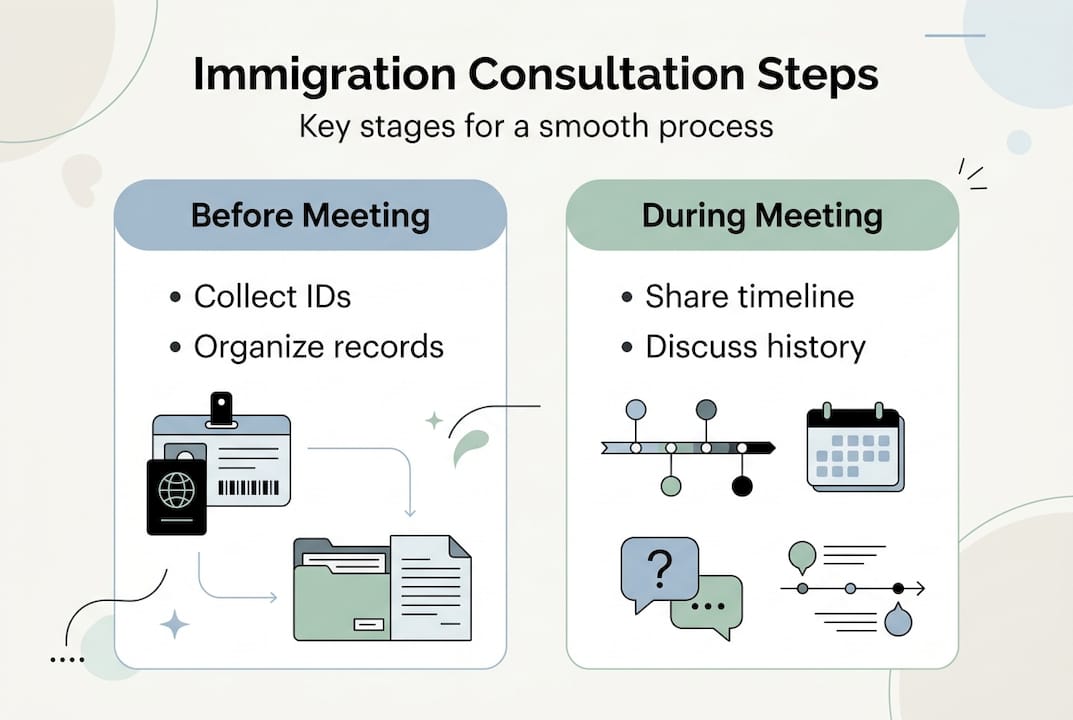
The single most important thing you can do before your first meeting is show up prepared. Attorneys and consultants can only help you as much as the information you bring them. A complete, organized file tells your story accurately and gives your advisor the full picture needed to spot risks before they become problems.
Preparing for a consultation means compiling your full immigration history, including passports, I-94 cards, all prior USCIS notices, family relationship proofs, and a clear timeline of every entry and exit from the United States. Skipping even one item can lead to a request for evidence (RFE) later, which adds months to your case.
Here is a checklist of must-have documents for every family member included in your petition:
- Valid passport (and expired passports if applicable)
- I-94 arrival/departure records
- All USCIS notices, approval letters, and denial letters
- Birth certificates, marriage certificates, or adoption records
- Prior visa stamps and any visa waiver documentation
- Tax returns or financial records if sponsoring a relative
- Any court records or criminal history documentation
Full disclosure is not optional. It is the foundation of an accurate compliance review for immigration. Attorneys use your complete history to assess inadmissibility risks, unlawful presence issues, and whether your family qualifies for the fastest available path. Hiding or forgetting details does not protect you. It creates gaps that USCIS will find anyway.
| Document type | Who needs it | Why it matters |
|---|---|---|
| Passport (current + expired) | Every applicant | Proves identity and travel history |
| I-94 record | Every entrant | Confirms legal entry and status |
| Prior USCIS notices | Every applicant | Shows prior filings and outcomes |
| Family proofs (birth/marriage cert.) | Petitioner and beneficiary | Establishes qualifying relationship |
| Financial records | Sponsor | Meets income requirements for I-864 |
Pro Tip: Create one shared digital folder for your entire family's immigration documents. Organize subfolders by person and document type. This makes it easy to share files quickly, reduces the chance of missing items, and keeps everything accessible if you need to reference documents during your consultation. Review our filing tips for more ways to stay organized.
Being thorough at this stage is not just about being organized. It is about protecting your family's timeline and your chances of approval.
Understanding the attorney consultation process
With your initial paperwork organized, you'll move into the first attorney meeting. This is where the real analysis begins. Your advisor will review everything you brought and start mapping out which immigration path fits your family's situation.
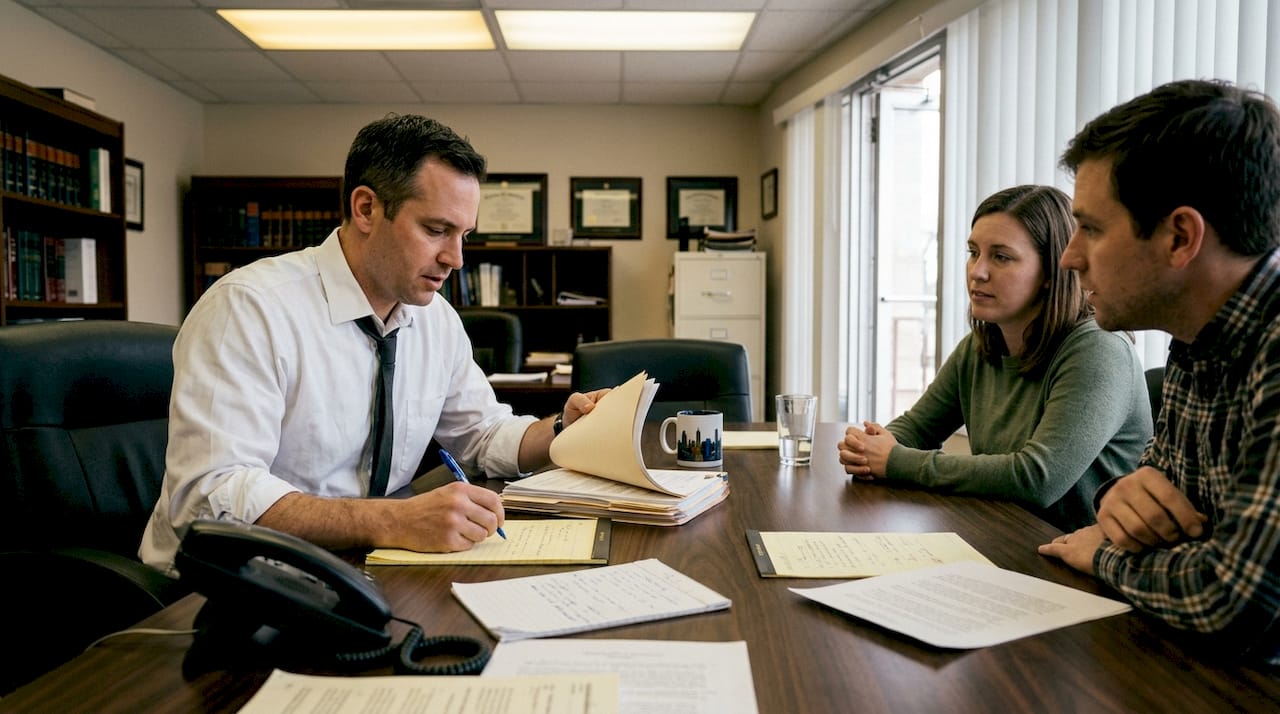
The first thing an attorney evaluates is your family's category. Immediate relatives of U.S. citizens, meaning spouses, unmarried children under 21, and parents, have no visa wait because they are not subject to annual caps. Preference categories, which include adult children, siblings, and relatives of permanent residents, face waiting periods that can stretch years or even decades depending on the country of birth.
Here is what a typical consultation covers, step by step:
- Review of immigration history and documents
- Identification of the correct family-based category
- Assessment of risks including unlawful presence and inadmissibility
- Selection of the right application path
- Outline of next steps and estimated timeline
The two main paths are adjustment of status using Form I-485 if your family member is already in the United States, or consular processing through the National Visa Center (NVC) if they are abroad. Each has different risks and benefits.
| Path | Who qualifies | Key risk |
|---|---|---|
| Adjustment of status (I-485) | Applicants already in the U.S. | Must maintain lawful status during process |
| Consular processing | Applicants outside the U.S. | Re-entry bars may apply if unlawful presence exists |
"There are no hidden shortcuts in immigration. Full transparency with your advisor is not just recommended, it is what separates successful cases from costly delays."
Your attorney will also check for prior stays beyond authorized periods, any criminal history, and whether previous visa denials could affect your current application. This is why comprehensive immigration support matters so much. A thorough review at this stage prevents surprises later.
Family-based application steps and timelines
Knowing which path fits your family, you'll follow a series of application steps, each with its own timeline. The process is sequential, meaning delays in one step push everything else back. Understanding the order keeps you from losing time unnecessarily.
Here is the standard sequence for a family-based green card:
- File Form I-130 (Petition for Alien Relative) to establish the qualifying relationship
- Wait for I-130 approval and priority date to become current (if preference category)
- File Form I-485 (adjustment of status) if in the U.S., or proceed through NVC for consular processing
- Attend biometrics appointment
- Complete medical exam (Form I-693)
- Attend interview at USCIS field office or U.S. consulate
- Receive decision and, if approved, receive green card
Timelines vary significantly by category. I-130 processing for immediate relatives takes roughly 10 to 18 months. Immediate relatives have no visa wait after approval because no annual cap applies to them. Preference categories must wait for a visa number to become available based on the monthly Visa Bulletin.
| Category | Relationship | Approximate wait |
|---|---|---|
| Immediate relative | Spouse/parent/child under 21 of U.S. citizen | No visa wait; I-130 ~10-18 months |
| F1 | Unmarried adult children of U.S. citizens | Several years |
| F2A | Spouses/children of permanent residents | 2-5 years |
| F2B | Unmarried adult children of permanent residents | 5-10 years |
| F4 | Siblings of U.S. citizens | 15+ years for some countries |
As of 2026, I-130 immediate relative processing averages around 14.5 months, while family-based I-485 adjudication runs 6 to 18 months. F4 siblings from the Philippines or Mexico face waits exceeding 15 years due to backlogs.
Pro Tip: Check the USCIS Visa Bulletin every month. Priority dates shift forward and sometimes backward based on demand. Missing a current date can delay your filing window by months. Bookmark the green card overview to stay informed on each stage.
Troubleshooting: Common issues and exceptions
Even with perfect preparation, some families hit bumps. It is key to know what to look for and when to seek help. Most complications are manageable when caught early, but they become serious when ignored.
Here are the most common issues families face during the process:
- Unlawful presence: Staying beyond your authorized period can trigger 3-year or 10-year re-entry bars. A waiver using Form I-601 may be required before your case can move forward.
- Outdated or missing documents: Expired passports, missing birth certificates, or incomplete I-94 records can cause RFEs and delays.
- Conditional green cards: If you received a green card based on a marriage under two years, it is conditional. You must file Form I-751 to remove conditions before the card expires.
- Prior denials: A previous visa denial does not automatically bar you, but it triggers additional scrutiny and must be disclosed.
- Visa Bulletin retrogression: Priority dates can move backward. If this happens while your case is pending, you may need to wait again before filing the next step.
Pro Tip: Set a calendar reminder to check the USCIS green card application page and the Visa Bulletin on the first of every month. Retrogression can happen without warning, and staying informed keeps your timeline accurate. Visit our immigration help resources for local support options in Minnesota.
"Most errors in immigration cases are not about missing paperwork. They are about missing context. A careful, timely review catches problems before they become permanent barriers."
If your family member has a complex history, including prior deportations, criminal records, or health-related grounds of inadmissibility, waivers and additional documentation are available. The key is not to assume the worst. Get a proper assessment first.
Our take: Compassion, clarity, and what most guides miss
Most immigration guides focus on forms and deadlines. That is useful, but it misses something important. In our experience working with immigrant families in Minneapolis and beyond, the cases that go sideways rarely fail because of missing paperwork. They fail because families did not feel safe enough to share the full picture.
Fear of judgment leads to omissions. Omissions create gaps. Gaps become RFEs, denials, or worse. The single biggest factor in a successful case is an open, honest conversation where nothing is held back.
We also see families get locked into one plan and miss better options. Monitoring the Visa Bulletin monthly is not just administrative busywork. Priority dates shift, policy changes, and the right filing window can open and close faster than most families expect. Adjustment of status, when available, is almost always safer than consular processing because it avoids re-entry bars.
The families who move through this process most smoothly are not the ones with the cleanest histories. They are the ones who communicate clearly and adapt quickly. That is what expert guidance for your journey actually looks like in practice.
Ready for expert support on your immigration journey?
You now have a clear picture of how the immigration consultation workflow operates, from document prep to troubleshooting. But knowing the steps and navigating them successfully are two different things.
At True Ventures, LLC, we bring firsthand immigrant experience and genuine care to every case we handle. Our team specializes in immigration filing assistance for families at every stage of the process. Whether you are just starting out or dealing with a complication, our consultation offerings are designed to give you clarity and a real plan. Explore our full list of services and take the next step with a team that treats your family's future as seriously as you do.
Frequently asked questions
What documents should an immigrant family bring to an initial consultation?
Bring passports, I-94 cards, all USCIS notices, family relationship proofs, and a complete timeline of entries and exits from the United States. Having everything organized in one place helps your advisor assess your case accurately from the start.
How long does family-based immigration take in 2026?
Immediate relative I-130 petitions average around 14.5 months, with I-485 adjudication taking 6 to 18 months after that. Preference categories like F4 siblings from the Philippines or Mexico can face waits exceeding 15 years.
What if a family member has unlawful presence or a prior denial?
They may need Form I-601 waiver or additional documentation before the case can proceed. A qualified advisor can assess the specific risk and identify the safest path forward.
Can all family members apply together under one petition?
No. Immediate relatives file separately, and derivatives such as spouses and children may qualify in certain preference categories but still submit their own applications. The Child Status Protection Act (CSPA) can protect a child's age during preference category waits.
Is adjustment of status better than consular processing?
Adjustment is generally safer when eligible because it avoids triggering re-entry bars that can arise from leaving the country. Your attorney should evaluate your specific history before recommending a path.