
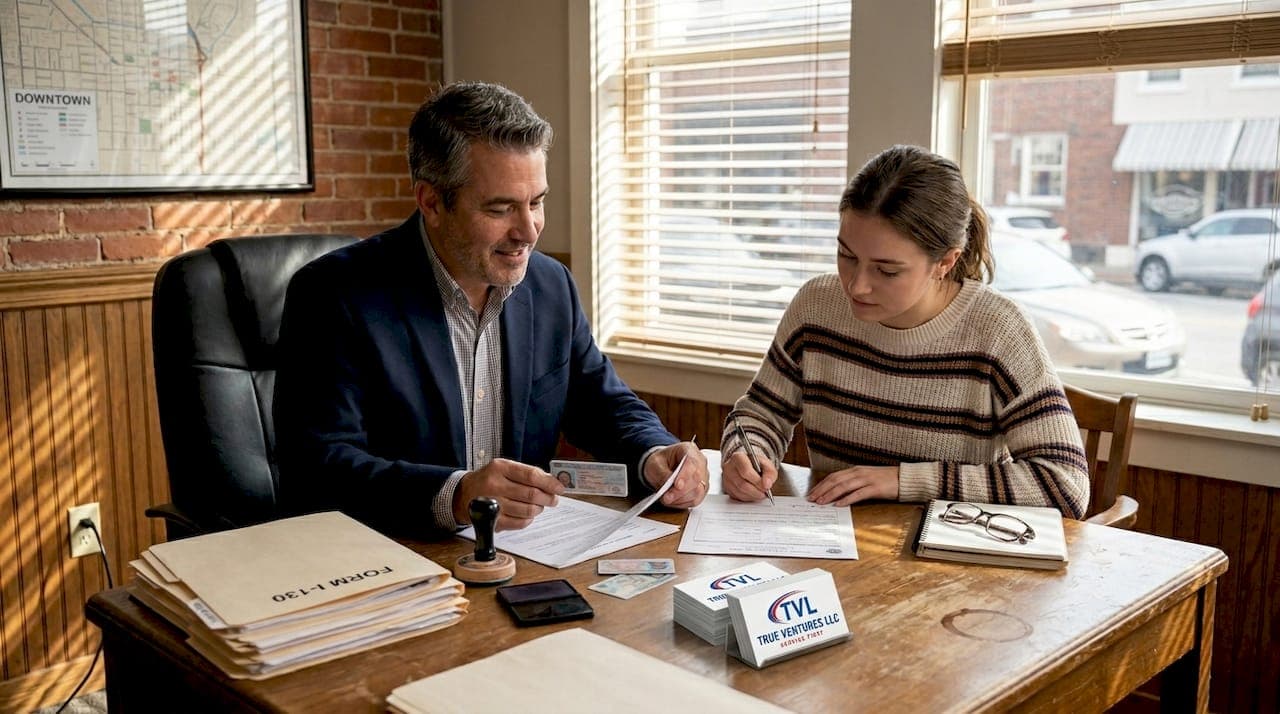
Many immigrants arrive at our office with a stack of documents, every single one notarized, convinced they've done everything right. The truth? USCIS policy makes clear that most immigration forms do not require notarization at all. Notarizing the wrong documents can actually raise red flags or cause processing delays. Understanding exactly when, why, and how notarization fits into your immigration case is not just helpful. It could be the difference between an approved application and a costly rejection.
Table of Contents
- What does a notary do in the immigration process?
- When is notarization required for immigration paperwork?
- How to handle foreign documents and authentication for U.S. immigration
- Risks of improper or unauthorized notarization and how to stay safe
- Why relying solely on notaries can hurt your immigration case
- How we can support your immigration journey
- Frequently asked questions
Key Takeaways
| Point | Details |
|---|---|
| Notaries’ true role | U.S. notaries can only witness and certify signatures; they cannot give legal immigration advice. |
| Notarization only in some cases | Most core immigration forms don’t require notarization, but certain supporting affidavits might. |
| Foreign documents need more | Authentication and apostille are necessary for foreign documents, not just notarization. |
| Beware unauthorized notaries | Unlicensed or improper notarization can cause delays, rejections, or fraud trouble. |
| Expert help matters | Legal review and certified support reduce risk and keep your immigration journey on track. |
What does a notary do in the immigration process?
A notary public in the United States has a specific and limited job. They witness signatures, verify the identity of the person signing, and certify that the signature is genuine. That's it. They are not lawyers, they are not immigration consultants, and they are not authorized to give you any legal advice about your case.
This distinction matters enormously for immigrants. In many Latin American countries, a notario publico is a highly trained legal professional, often equivalent to an attorney. When families bring that expectation to the U.S., they sometimes hand over sensitive documents and personal information to someone who is legally prohibited from advising them. The confusion is understandable, but the consequences can be serious.
Here is what a U.S. notary can do for your immigration paperwork:
- Witness and certify your signature on affidavits
- Verify your identity using government-issued ID
- Administer oaths for sworn statements
- Certify copies of certain documents
- Notarize translations when required by the receiving agency
Here is what a U.S. notary cannot do:
- Select which immigration forms you need
- Advise you on how to answer questions
- Represent you before USCIS
- Prepare or review your immigration petition
As notary service guidelines confirm, notaries cannot give immigration advice, select forms, or represent you before USCIS. Any notary who offers to do these things is operating outside the law, and you should walk away.
The real value a notary provides is evidentiary. When you submit a notarized affidavit, it signals to USCIS that the person who signed it did so voluntarily, under oath, with their identity confirmed. That adds credibility to your supporting evidence. It does not, however, replace the need for importance of compliance review to make sure your entire filing is accurate and complete.
Pro Tip: If a notary offers to "help you with your immigration case" beyond witnessing your signature, that is a major warning sign. Politely decline and seek a qualified immigration professional instead.
When is notarization required for immigration paperwork?
This is where most people get confused, and honestly, the rules are not always intuitive. Let's break it down clearly.
USCIS core forms like I-130 and I-485 do not require notarization, but supporting affidavits may. The form itself just needs your honest, accurate signature. What often does require notarization is the supporting documentation you attach, particularly sworn statements from third parties.
| Document | Notarization required? | Notes |
|---|---|---|
| Form I-130 (Petition for Alien Relative) | No | Sign as directed on the form |
| Form I-485 (Adjustment of Status) | No | No notarization needed |
| Form I-864 (Affidavit of Support) | No | But supporting docs may need it |
| Affidavit from a witness or sponsor | Often yes | Adds evidentiary weight |
| Sworn personal statements | Yes | Required to be notarized |
| Certified translations | Depends | Check agency requirements |
The I-864 instructions from USCIS confirm that the Affidavit of Support itself is not required to be notarized, though supporting financial documents attached to it sometimes are. Many applicants over-notarize this form, wasting time and money.
Here is a practical numbered guide to deciding whether to notarize a document:
- Check the USCIS form instructions directly. If they don't mention notarization, you likely don't need it.
- Identify whether the document is a sworn statement or affidavit. If yes, notarization typically adds value.
- Determine if a third party is making a legal declaration on your behalf. If so, notarization is usually appropriate.
- Consult your immigration document checklist to cross-reference each item before submission.
- When in doubt, ask a qualified immigration professional, not the notary.
Over-notarizing documents is a real problem. It can make your filing look disorganized or suggest you are unsure of what you're submitting. Under-notarizing sworn statements, on the other hand, can weaken your evidentiary record. The goal is precision, not volume.
How to handle foreign documents and authentication for U.S. immigration
Foreign documents are a completely different situation, and this is where many applicants make costly mistakes. If you were born in another country, your birth certificate, marriage certificate, police records, or court documents all need to go through a process that goes far beyond a simple notarization.
Here is the key distinction you need to understand:
| Process | What it means | Who does it |
|---|---|---|
| Notarization | Verifies a signature | U.S. notary public |
| Authentication | Certifies a document is genuine | State or federal authority |
| Apostille | International authentication stamp | Secretary of State or federal agency |
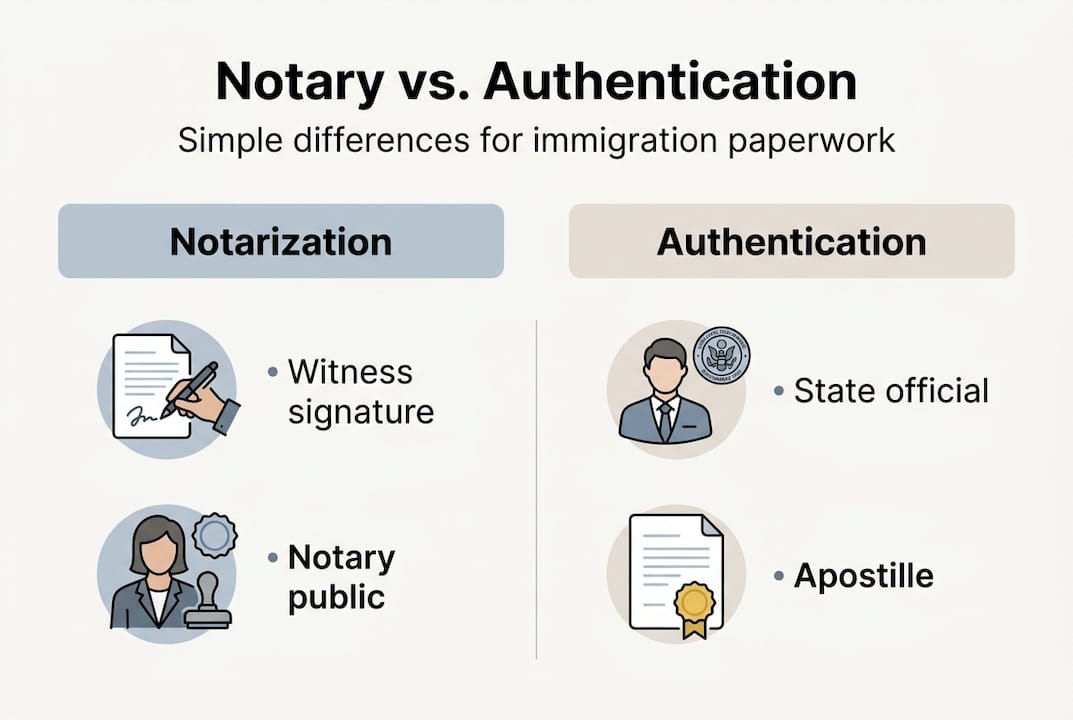
Foreign documents need state authentication and sometimes a federal apostille, not just notarization. The apostille is a standardized certificate used between countries that have signed the Hague Convention. If your home country is part of that convention, an apostille is the correct path. If not, you'll need a different chain of authentication.
Here is what the process typically looks like for a foreign birth certificate:
- Obtain a certified copy from the issuing country
- Have it officially translated into English by a certified translator
- Authenticate it through the appropriate government authority in the issuing country
- Obtain an apostille if applicable, following the apostille authentication process
- Submit both the original and the certified translation to USCIS
One critical rule: never notarize an original foreign document. Notarizing an original does not authenticate it under U.S. or international law. It may actually confuse the reviewing officer and slow down your case. For more context on foreign document requirements across different countries, the process varies significantly, so always verify the specific requirements for your country of origin.
Pro Tip: Always keep certified copies of every foreign document you submit. Original documents submitted to USCIS are sometimes not returned, and replacing them from abroad can take months.
Risks of improper or unauthorized notarization and how to stay safe
The stakes here are high. Improper or unlicensed notarization leads to delays, rejections, or fraud scrutiny. And in 2026, USCIS is not being lenient. USCIS fraud detection found fraud in 65% of cases reviewed since 2025. That is a staggering number, and it reflects how seriously the agency is treating document integrity right now.
"Using an unauthorized notary or someone who oversteps their legal role is not just a paperwork problem. It can result in a permanent bar from immigration benefits."
Here is what can go wrong when notarization is handled improperly:
- Your application is rejected outright, requiring you to refile and pay fees again.
- USCIS flags your file for fraud review, which can take months or years to resolve.
- You may be found to have submitted a materially false document, even if you didn't know it was improper.
- In serious cases, criminal charges can be filed against you or the person who notarized the document.
- A fraud finding can result in a permanent bar from receiving any immigration benefit.
To protect yourself, use this checklist before working with any notary:
- Verify the notary holds a current, valid commission in their state
- Confirm they are not offering legal advice or form assistance
- Check that they are not charging for services they are not licensed to provide
- Ask if they have experience with immigration-related notarizations
- Make sure to avoid immigration filing errors by having a professional review your full packet
- Learn how to collect evidence properly so notarized statements actually support your case
The notario publico problem is especially dangerous in immigrant communities. Someone who presents themselves as a notario may be trusted because of cultural familiarity, but in the U.S., they have no legal authority to advise you on immigration matters. Using one can backfire badly.
Why relying solely on notaries can hurt your immigration case
We've worked with hundreds of families navigating the U.S. immigration system, and one pattern shows up again and again. People treat notarization as a magic stamp that makes documents "official" and therefore acceptable to USCIS. It doesn't work that way.
Notarization confirms that a signature is real. It says nothing about whether the underlying information is accurate, whether the right form was chosen, or whether the supporting evidence actually builds a coherent legal argument. Those are strategic decisions that require real expertise.
The most common mistake we see is clients who spent months collecting and notarizing documents, only to discover they notarized the wrong things or missed critical supporting evidence entirely. A notary cannot catch that. Only someone who understands how attorneys improve outcomes in immigration cases can see the full picture.
Treat notarization as one layer of document credibility. It is valuable, but it is not a strategy. Your case needs both.
How we can support your immigration journey
Navigating notarization rules, authentication requirements, and USCIS filing standards is genuinely complex, and getting it wrong can set your case back by months or years. At True Ventures, LLC, we bring firsthand immigrant experience and deep procedural knowledge to every client we serve.

Whether you need immigration filing assistance for I-130, I-485, or other petitions, or you want a full compliance review before you submit, we are here to make sure every document in your packet is accurate, properly authenticated, and strategically sound. Explore all the ways our immigration consultants can support your next steps and reduce the risk of costly errors.
Frequently asked questions
Do all U.S. immigration forms require notarization?
No. USCIS core forms like I-130 and I-485 do not require notarization, though supporting affidavits submitted alongside them sometimes do.
What's the difference between a U.S. notary and a 'notario publico'?
In the U.S., notaries only witness signatures and cannot offer legal advice. Confusing them with Latin American notarios publicos, who are licensed attorneys, can lead to fraud and serious legal consequences.
How should I prepare foreign documents for USCIS?
Foreign documents must go through proper state authentication and, where applicable, an apostille. Simple notarization is not sufficient.
Can a notary help me fill out immigration forms?
No. U.S. notaries are legally barred from offering form selection or legal advice. Any notary who offers immigration advice is operating outside their authorized role.
What are the risks of improper notarization for immigration?
Improper notarization can trigger application rejection, fraud review, or even permanent bars from immigration benefits. Unlicensed notarization is treated as a serious compliance violation by USCIS.